
EU Nickel-Release Compliance Checklist | Hengdian (HD) Jewelry
If you wholesale into Germany, France, the Netherlands, Italy or any other EU member state, nickel is the compliance line you cannot cross. Many importers do not set out to break the rules — they simply do not know whether their gold-plated brass pieces count as compliant. This evergreen guide explains the EU baseline, what Hengdian (HD) Jewelry does on every batch, and a five-step checklist you can run before your next shipment. Under REACH Regulation (EC) No 1907/2006, Annex XVII, Entry 27, articles intended to come into direct and prolonged contact with the skin must release nickel at no more than 0.2 µg/cm²/week. The same Annex applies a stricter limit of 0.5 µg/cm²/week to piercing-post items such as earring posts. This is a baseline, not a new rule — it has been in force since the original 1994 Nickel Directive — but enforcement through customs holds, marketplace takedowns and REACH inspections has tightened considerably in the past five years. We do not use that label. Our pieces are made of brass with an 18K gold plating layer designed to keep nickel release well under the EU 0.2 µg/cm²/week threshold. We describe what we do, not what we are not. We share batch plating-thickness and migration-relevant data on request when an order is placed. We do not issue a separate paid certificate for each shipment. This article covers EU REACH. The US (California Prop 65), Canada, Australia and other regions have different regimes — contact us before quoting for those markets. Send us the SKUs and the destination country. We will return the relevant plating and release data along with a per-batch summary you can keep on file.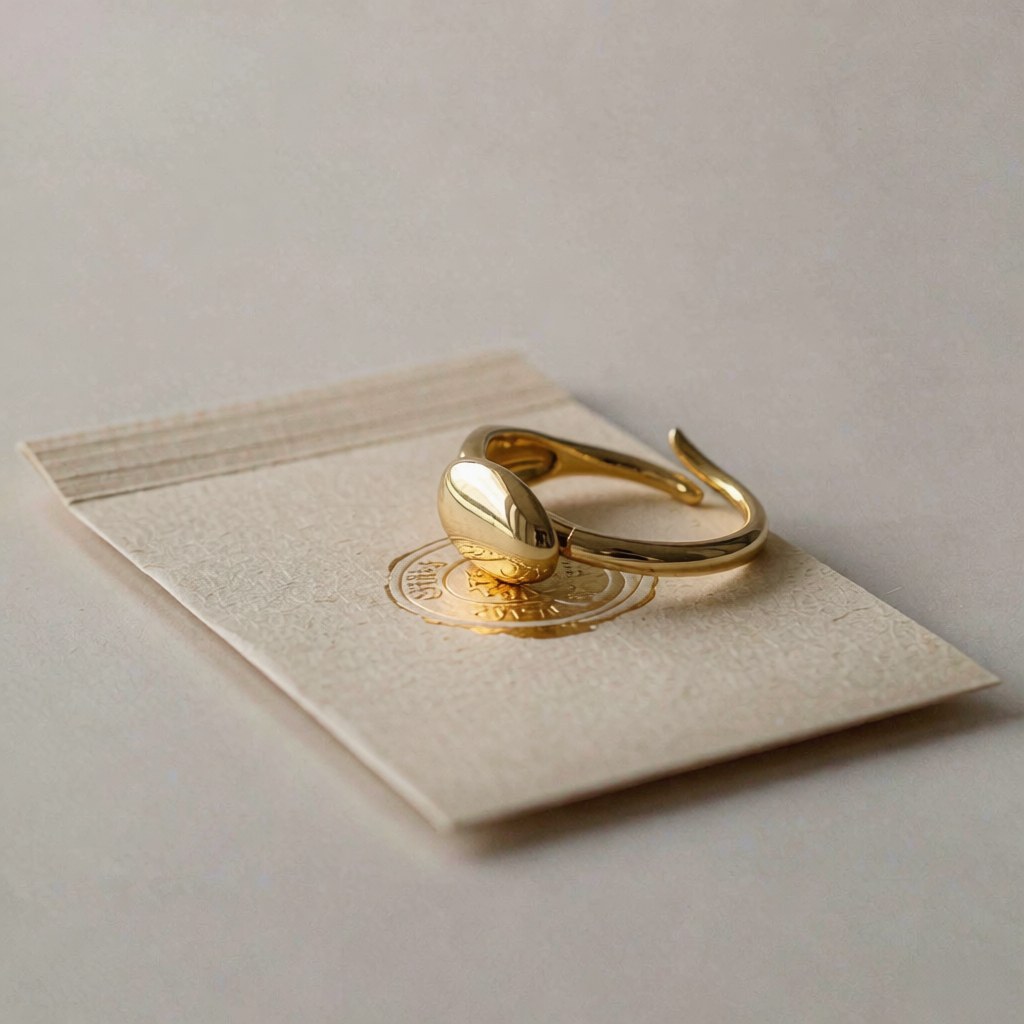
What the EU actually requires
How Hengdian (HD) Jewelry handles it on every batch
What you need to check
What Hengdian (HD) Jewelry does
Whether nickel migrates above the 0.2 µg/cm²/week threshold
Every piece is 18K gold plated at 0.1–0.3 µm over a brass substrate. The gold layer is dense and continuous, blocking nickel migration well below the EU limit.
Whether each batch is documented
Plating thickness and release-relevant data are recorded per batch. We share batch summaries on request when you place an order.
Whether the result is consistent across SKUs
All ready-to-ship and custom plating runs use the same plating line with the same parameters. Batch-to-batch variation stays inside a narrow band.
Whether custom orders are covered
Custom plating jobs use the same line and same parameters as core stock. There is no separate "cheap" plating path.
Whether piercing-site items meet the stricter limit
The product falls under the category of fashionable decorative jewelry and complies with the REACH regulations regarding the release of nickel through ordinary skin contact for jewelry. If you need a version that can be adapted to the perforated area, we can upgrade it to stainless steel. This version will incur additional costs and have a minimum order quantity requirement. Please let us know your order quantity and we will contact you to discuss more details.
A five-step checklist before you ship to the EU

Questions we hear from EU buyers
Do you label your jewelry as nickel-free?
Will you send a certificate with every order?
Does this article apply outside Europe?
Want batch data for an EU shipment you are planning?